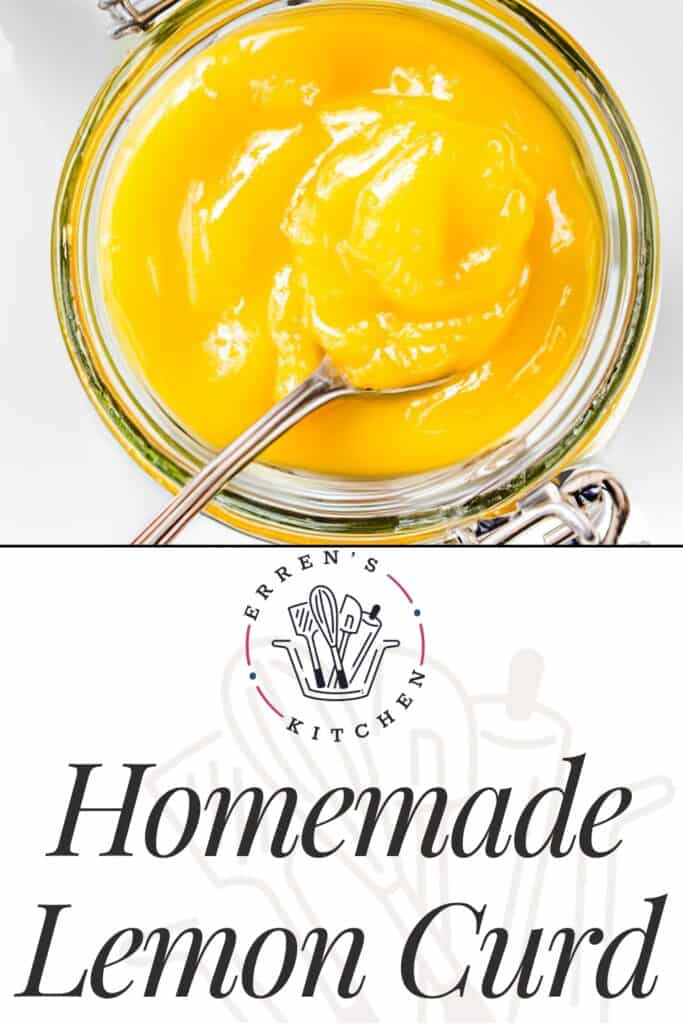
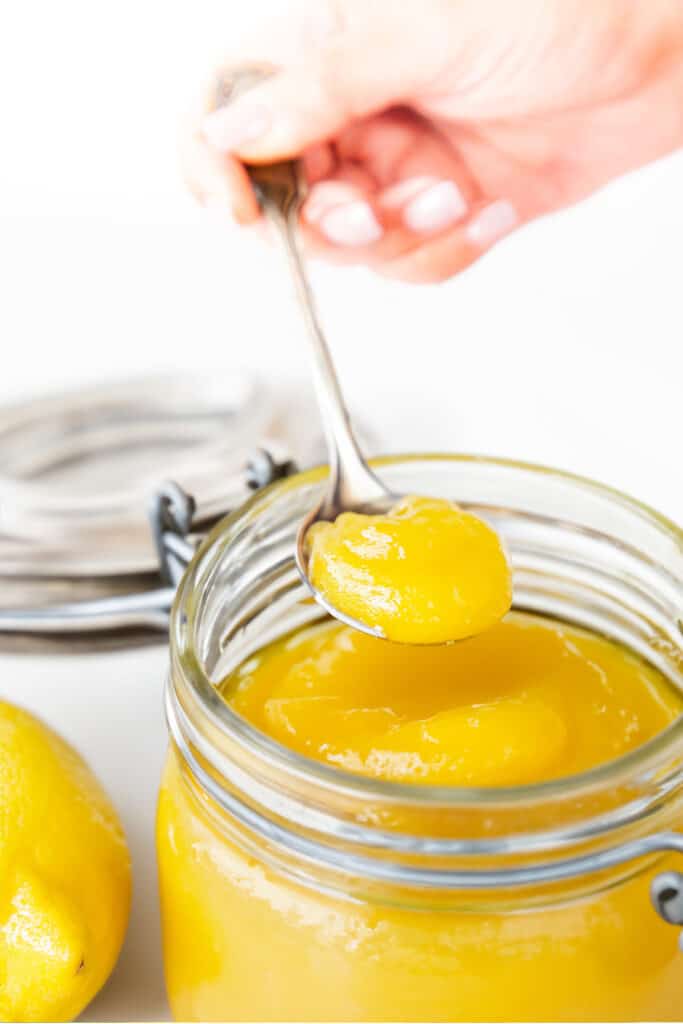
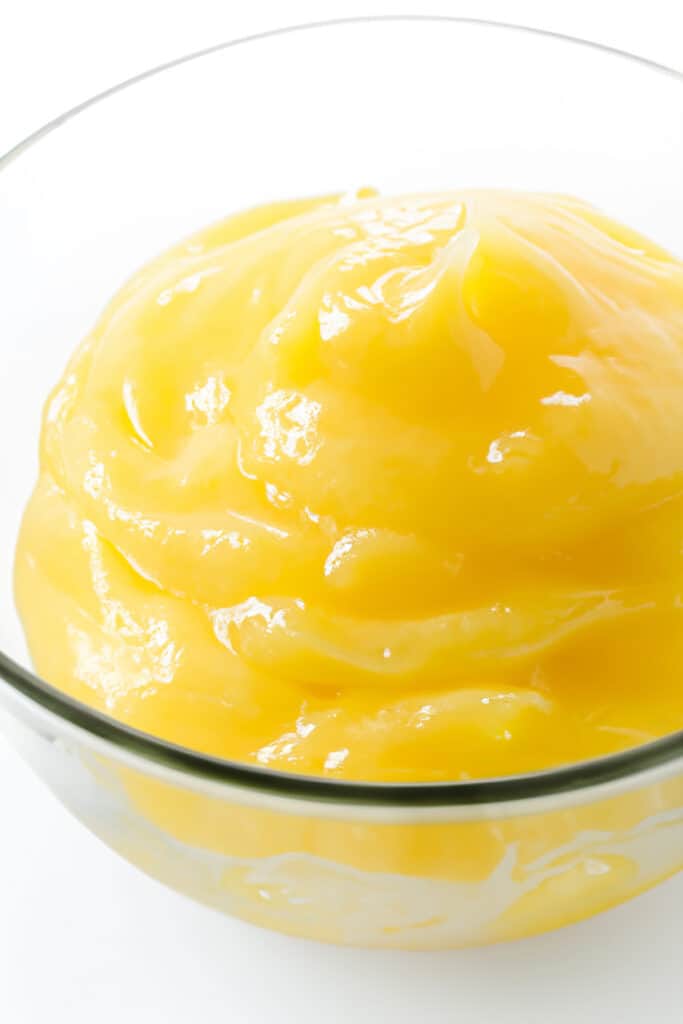
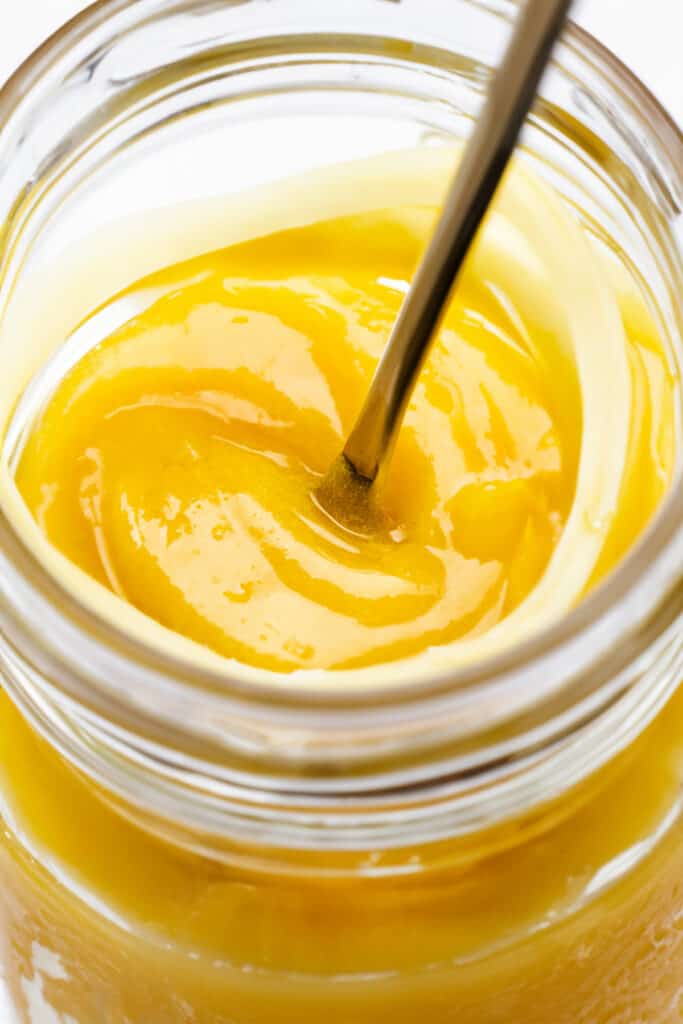
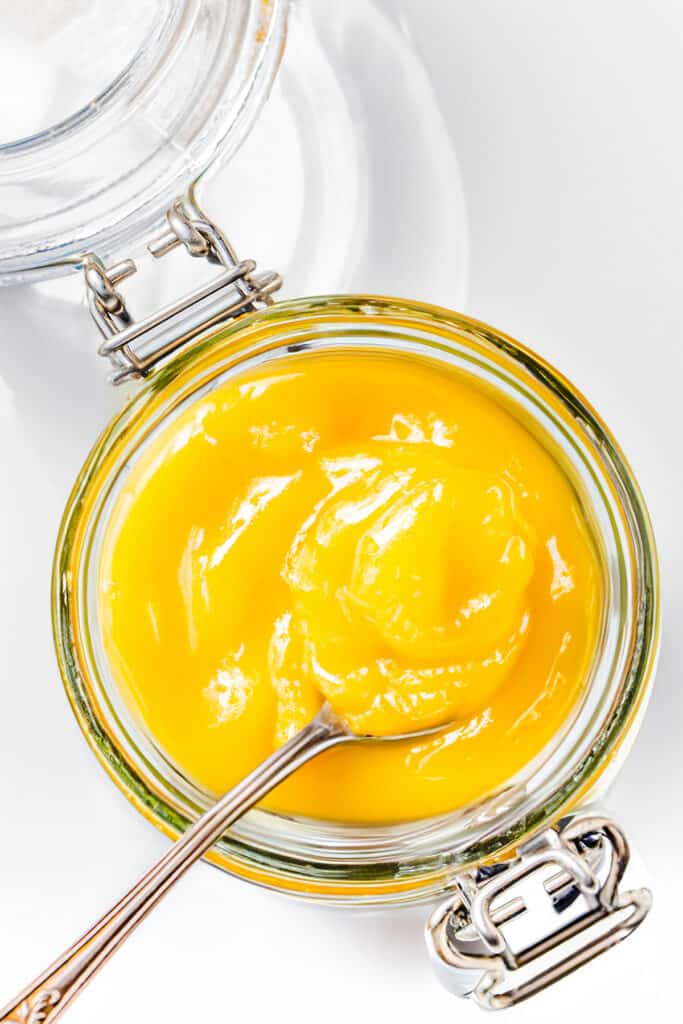
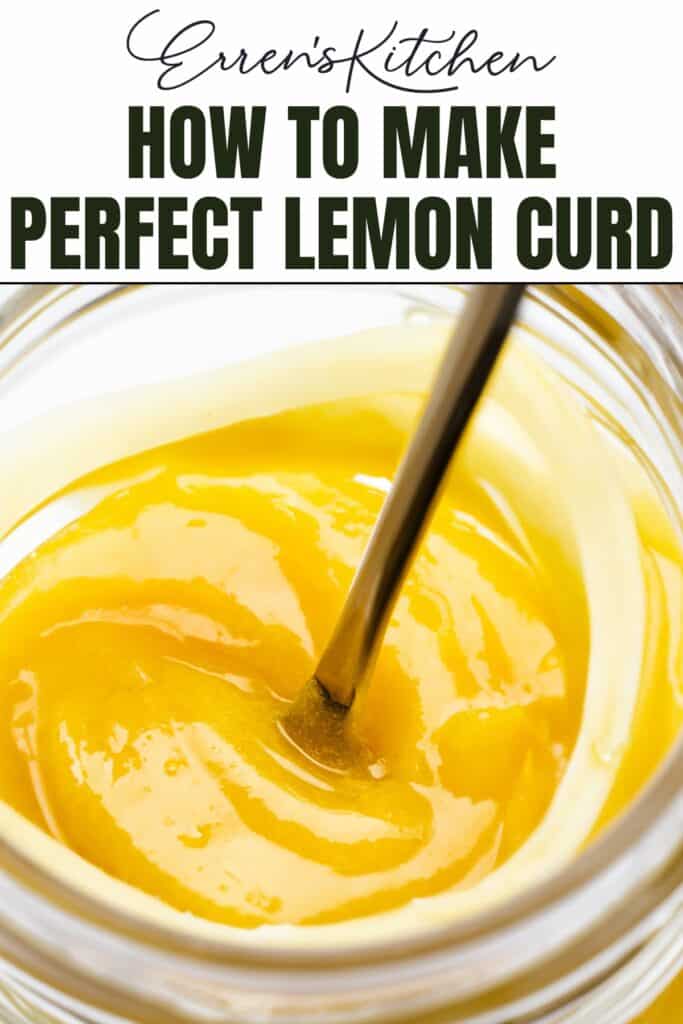

Discover our ultimate guide to homemade Lemon Curd! This simple recipe makes a zesty, flavorful recipe perfect for desserts of all kinds.
Welcome to a burst of tangy sweetness! Today, we’re making a homemade Lemon Curd, an easy and versatile dessert ingredient that makes your pastries, cakes, and treats extra special. Whether it’s used to fill a sponge cake or strawberry tart or simply served topped with whipped cream , It’s an experience of zesty freshness that will transport your tastebuds to a sunny lemon grove. Let’s dive right into the zesty details!
in this article:
- Why This Recipe Works
- Ingredient Notes
- Step By Step Instructions
- Recipe Tips
- Storage & Freezing Instructions
- Lemon Curd
Why This Recipe Works
- This recipe elevates the citrusy, tangy flavor of fresh lemons by pairing it with the sweetness of sugar and the richness of butter , creating a balanced, bright, and indulgent treat.
- Eggs add richness , while an extra egg yolk gives the curd the extra lemon color you expect in a curd.
- The addition of cornstarch helps the curd reach an irresistibly silky and smooth consistency, perfect for spreading or drizzling.
- We’ve included a clever technique for tempering eggs, ensuring your lemon curd maintains a smooth texture and never becomes grainy.
Ingredient Notes

Butter: Use unsalted butter for the best control over the saltiness. It’s generally available in the dairy section of most grocery stores. You can substitute with margarine if needed.
Sugar: Granulated sugar works best for this recipe, offering the right sweetness and consistency. If desired, substitute with equal parts coconut sugar. It’s typically found in the baking aisle.
Salt: Regular table salt is suitable. If substituting, use 1/2 the amount of kosher or sea salt. Found in the spices section.
Lemon Zest & Juice: Fresh lemons are crucial for maximum flavor. Opt for large, ripe lemons for the zest and juice. Found in the produce section. If necessary, use bottled lemon juice.
Eggs: Use large eggs. They are typically in the dairy section. No suitable substitutes for this recipe.
Cornstarch: This helps thicken the curd. Found in the baking aisle. If necessary, substitute with equal parts arrowroot powder.
Choosing Lemons For Curd
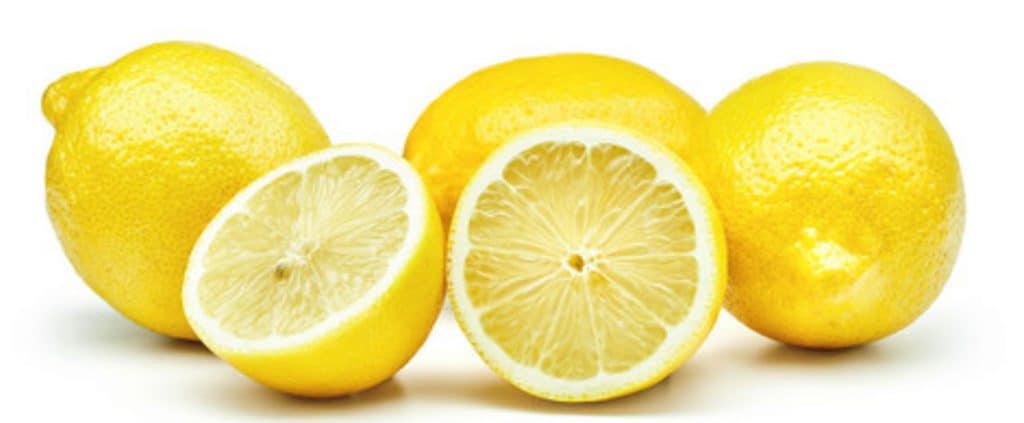
When using the zest, always be sure to buy unwaxed lemons. When buying lemons, look for ones that are firm, bright yellow with a slightly glossy finish. They should feel heavy for their size, which indicates more juice. Avoid any with soft spots or blemishes.
Step By Step Instructions
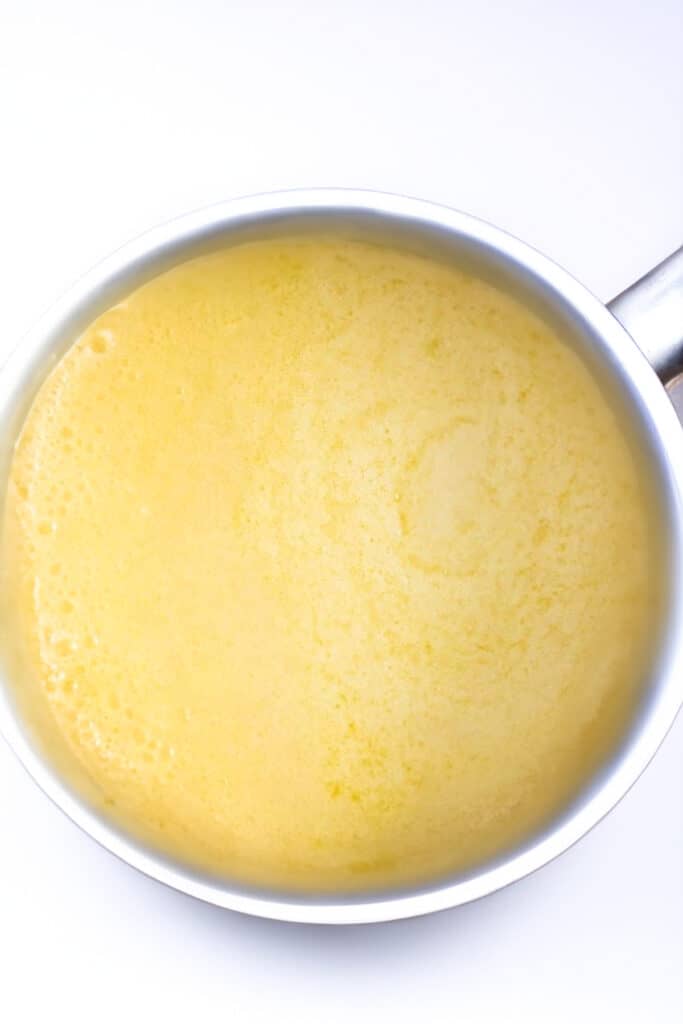
Start by melting 1 cup of butter in a medium saucepan over medium heat with 1 1/2 cups of sugar and 1/2 teaspoon of salt. Stir until the sugar is well incorporated. The sugar might not completely dissolve at this point, which is expected due to the butter’s temperature.
In a separate bowl, whisk together 3 tablespoons of finely grated lemon zest, 3 large eggs, 3 egg yolks, and 1 cup of fresh lemon juice.
Temper the eggs to prevent them from curdling. This involves slowly pouring a small amount of the hot butter mixture into the egg mixture while whisking continuously. This is a vital step to gradually increase the eggs’ temperature without scrambling them.
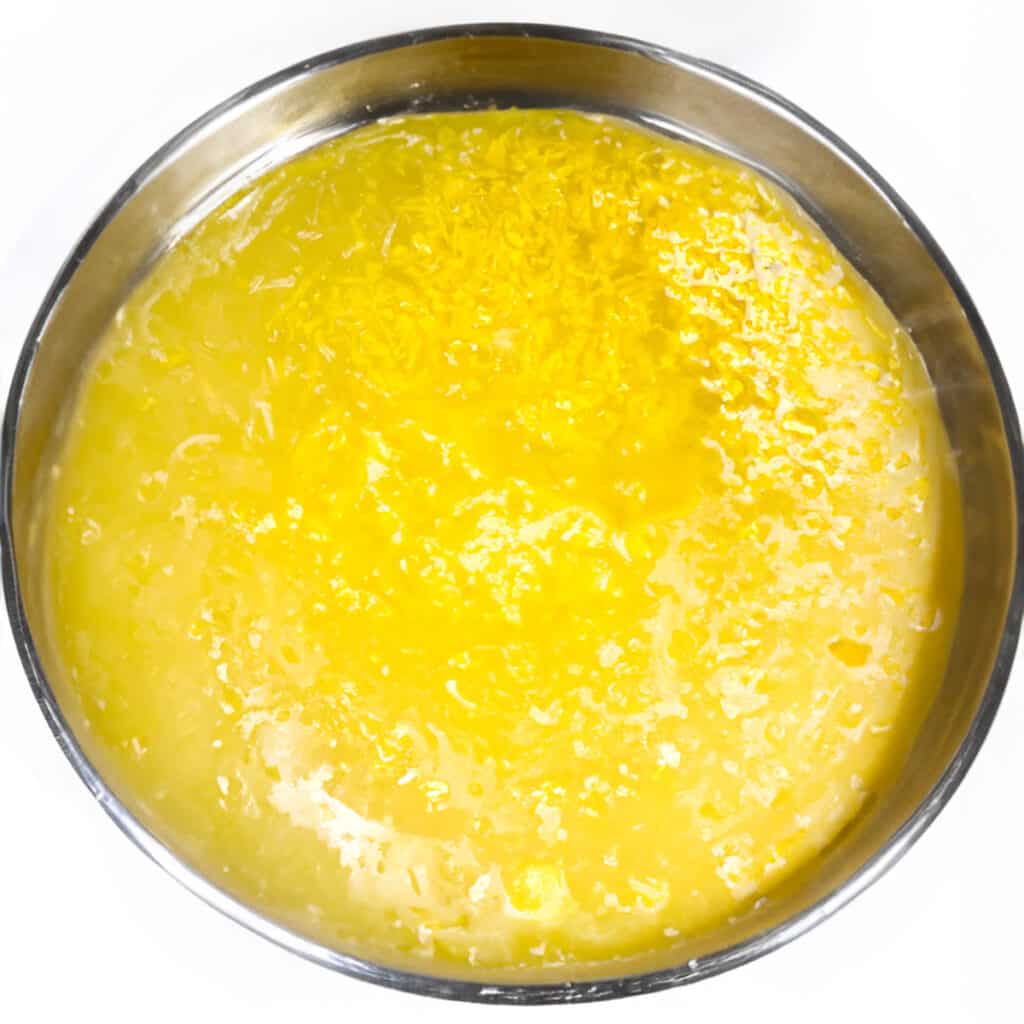
Next, pour the tempered egg mixture back into the saucepan with the remaining butter mixture. This merges the two main components of your curd, starting to form its unique, creamy texture.
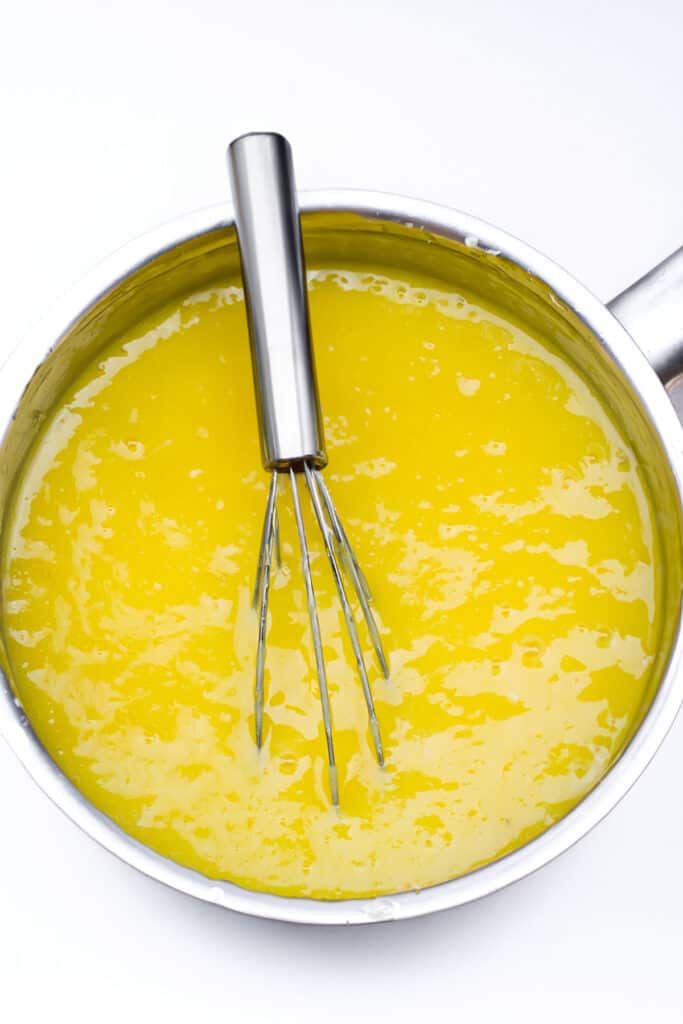
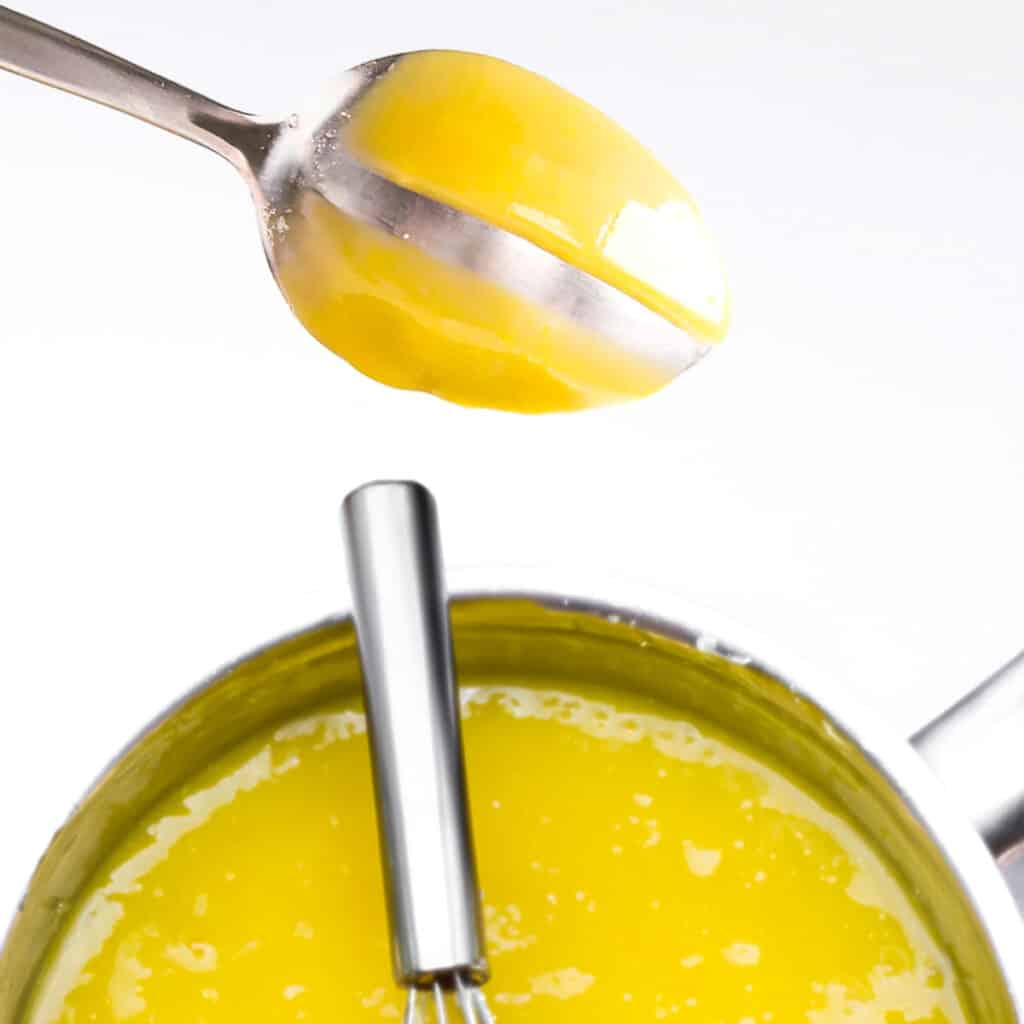
Continue cooking the curd over medium heat, whisking constantly for about 8 minutes, until it thickens and begins to bubble slightly. This step is important for achieving the right consistency and cooking the eggs fully. Avoid a full boil to prevent overcooking.
Want to make this recipe in a slow cooker? See the recipe card for instructions.
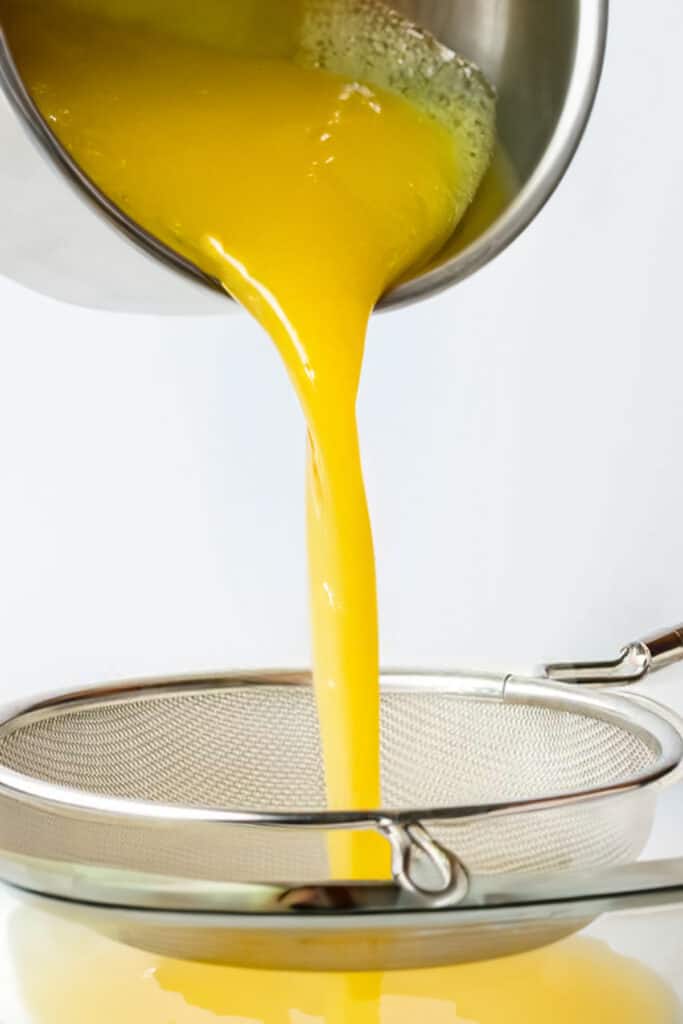
Once thickened, remove the saucepan from the heat and strain the curd through a sieve into a clean bowl. This ensures a smooth consistency by removing any potential lumps or excess zest.
Place a piece of plastic wrap directly on the surface of the curd to prevent a skin from forming, and let it cool to room temperature. The curd will thicken further as it cools, yielding a perfect, spreadable texture.
After cooling, transfer the curd to the refrigerator until completely chilled. This recipe yields about 2 cups of lemon curd.
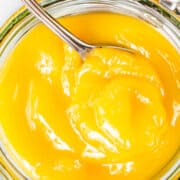
And there you have it, a beautifully smooth, tangy, and sweet lemon curd! It’s like bottled sunshine, ready to brighten up any dessert you choose. Enjoy!!
Recipe Tips
- Zesting the Lemons: Before you squeeze the lemons for juice, zest them first. It’s easier to hold and zest a whole lemon than a squeezed one.
- Juicing the Lemons: To get the most juice out of your lemons, roll them on your countertop, applying a bit of pressure with the heel of your hand before cutting and squeezing them.
- Tempering the Eggs: Tempering slowly raises the temperature of the eggs, preventing them from cooking too quickly and scrambling. Adding hot liquid bit by bit while whisking constantly is key.
- Whisking the Mixture: Whisking isn’t just for combining. It adds air into the mixture, making your curd lighter. Be sure to whisk continually while your curd is cooking to avoid lumps.
- Checking the Consistency: As explained earlier, the spoon test is a simple yet effective way to ensure your curd is perfectly thickened.
- Cooling the Curd: It’s important to cool the curd at room temperature before refrigerating. A rapid temperature change can alter the texture of the curd.
- Storing the Curd: Make sure to press plastic wrap onto the surface of the curd before storing to prevent a skin from forming. This helps maintain a smooth texture.
- Experiment with Flavor: Once you’re comfortable with the recipe, feel free to experiment with other citrus fruits like limes or oranges for a twist on the classic lemon curd.
Storage & Freezing Instructions
Store lemon curd in the refrigerator for up to 3 weeks. If you’d like to freeze it, use an airtight container, leaving a little space for expansion. It can be frozen for up to 1 year. Thaw in the refrigerator before using.
Rate This Recipe
Ingredients
- ▢ 1 cup butter
- ▢ 1½ cups sugar ((if you like a sweeter curd use 1 2/3 cups))
- ▢ ½ teaspoon salt
- ▢ 3 Tbsp finely grated lemon zest
- ▢ 3 large eggs
- ▢ 2 egg yolks
- ▢ 1 cup fresh lemon juice (about 4 large lemons)
- ▢ 1 tsp cornstarch
Instructions
- In a medium saucepan, melt the butter over medium heat with the sugar and salt. Stir until the butter is fully melted, and the sugar is incorporated (the sugar will not completely dissolve at this point).
- While the butter mixture is heating up, prepare the tempered eggs. Whisk together in a separate bowl, the finely grated lemon zest, eggs, egg yolks, fresh lemon juice, and cornstarch until well combined.
- Temper the eggs: Slowly pour a small amount of the hot butter mixture into the egg mixture, whisking continuously. This will gradually raise the temperature of the eggs without curdling them.
- Once the eggs are tempered, pour the entire egg mixture back into the saucepan with the remaining butter mixture. Whisk everything together thoroughly.
- Continue to cook the lemon curd over medium heat, whisking constantly, until it thickens and just begins to bubble. This should take about 8 minutes. Make sure not to bring it to a full boil.
- Remove the saucepan from the heat and strain the lemon curd through a sieve into a clean bowl to remove any lumps or zest.
- Place a piece of plastic wrap directly on the surface of the lemon curd to prevent a skin from forming. Let it cool to room temperature.
- Once cooled, refrigerate the lemon curd until completely chilled. It will set further as it cools.
- The lemon curd can be stored in the refrigerator for up to 3 weeks.
Tips
- To easily zest lemons, use a microplane or the smallest holes on a box grater.
- To get the most juice out of your lemons, roll them on the countertop before juicing.
- Keep a careful eye on the mixture while it’s thickening to avoid overheating.
Nutrition
Lemon Curd
Ingredients
- 1 cup butter
- 1½ cups sugar (if you like a sweeter curd use 1 2/3 cups)
- ½ teaspoon salt
- 3 Tbsp finely grated lemon zest
- 3 large eggs
- 2 egg yolks
- 1 cup fresh lemon juice about 4 large lemons
- 1 tsp cornstarch
Instructions
- In a medium saucepan, melt the butter over medium heat with the sugar and salt. Stir until the butter is fully melted, and the sugar is incorporated (the sugar will not completely dissolve at this point).
- While the butter mixture is heating up, prepare the tempered eggs. Whisk together in a separate bowl, the finely grated lemon zest, eggs, egg yolks, fresh lemon juice, and cornstarch until well combined.
- Temper the eggs: Slowly pour a small amount of the hot butter mixture into the egg mixture, whisking continuously. This will gradually raise the temperature of the eggs without curdling them.
- Once the eggs are tempered, pour the entire egg mixture back into the saucepan with the remaining butter mixture. Whisk everything together thoroughly.
- Continue to cook the lemon curd over medium heat, whisking constantly, until it thickens and just begins to bubble. This should take about 8 minutes. Make sure not to bring it to a full boil.
- Remove the saucepan from the heat and strain the lemon curd through a sieve into a clean bowl to remove any lumps or zest.
- Place a piece of plastic wrap directly on the surface of the lemon curd to prevent a skin from forming. Let it cool to room temperature.
- Once cooled, refrigerate the lemon curd until completely chilled. It will set further as it cools.
- The lemon curd can be stored in the refrigerator for up to 3 weeks.
Notes
- To easily zest lemons, use a microplane or the smallest holes on a box grater.
- To get the most juice out of your lemons, roll them on the countertop before juicing.
- Keep a careful eye on the mixture while it’s thickening to avoid overheating.
Nutrition
Thank you for visiting Erren’s Kitchen!
