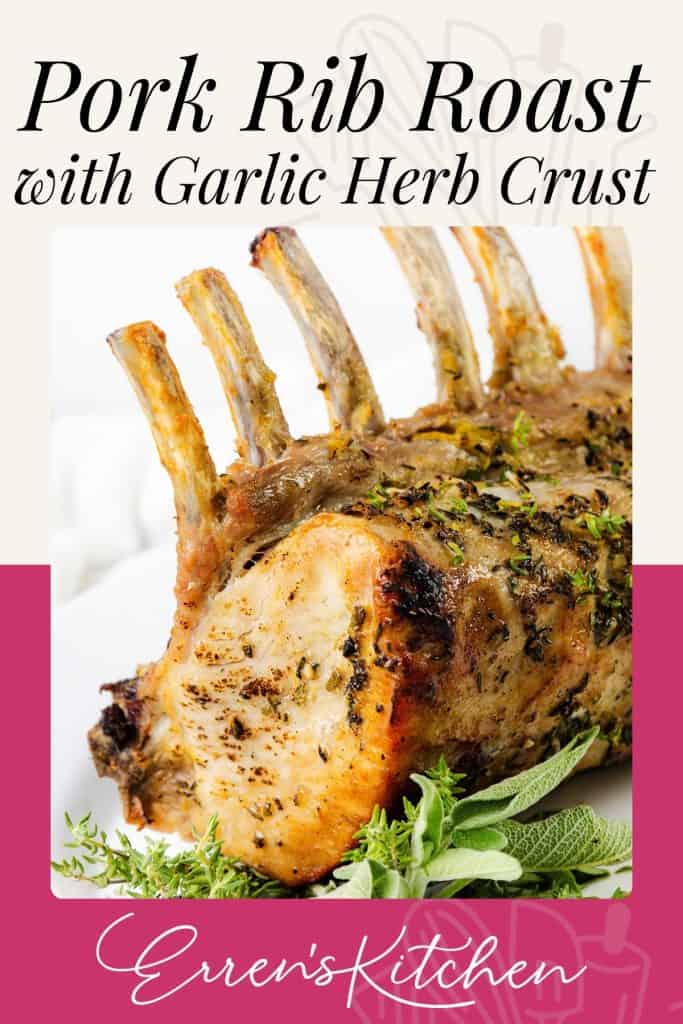
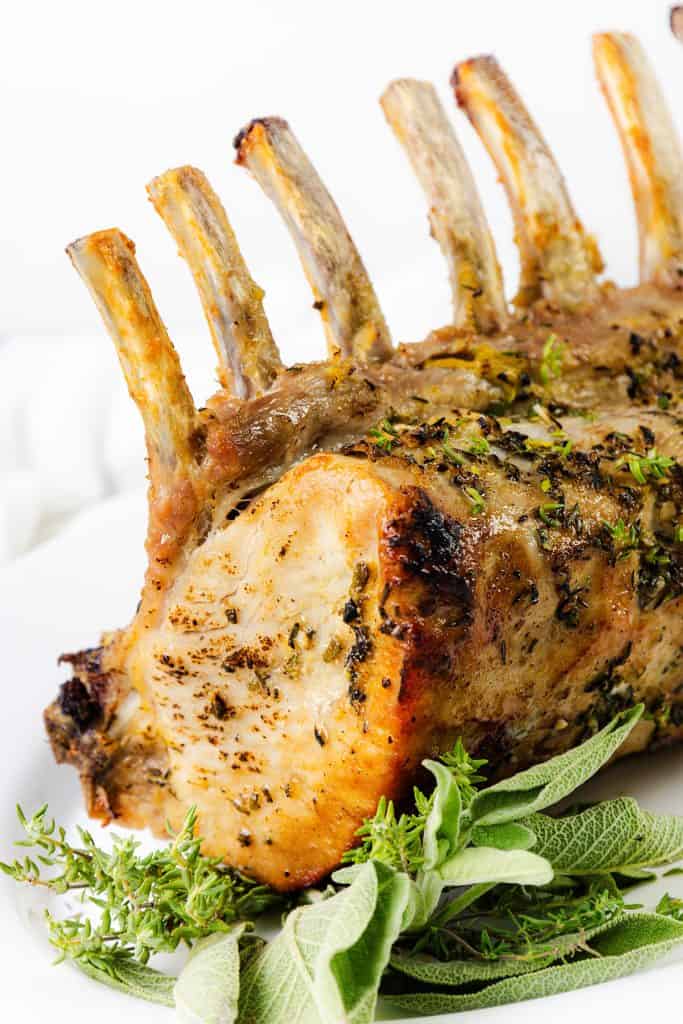
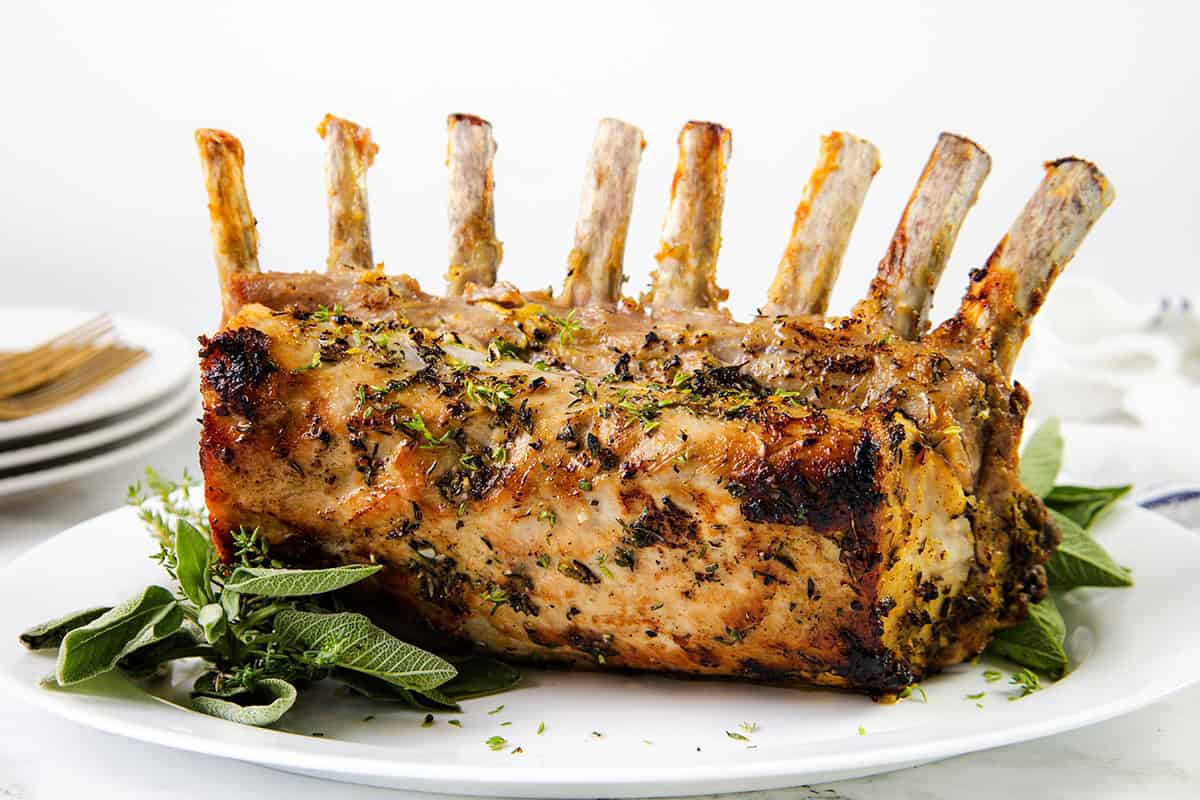
This Pork Rib Roast is simple to prep, reliable to cook, and perfect for holidays or Sunday dinner. Learn the steps for a tender, stress-free pork rib roast.
in this article:
- Know Before You Scroll
- In the Test Kitchen
- Ingredient Notes
- How To French Cut A Pork Rib Roast
- How to Make Pork Rib Roast
- Perfect Pairings
- Pork Rib Roast with Garlic Herb Crust
- Erren’s Top Tips
- Variations & Add-Ins
- Storage & Freezing
- FAQs
Know Before You Scroll
What You’ll Need
Pork rib roast, fresh herbs, Dijon mustard, garlic, lemon zest
Flavor Profile
Savory, aromatic, herb-forward with a subtle lemon lift
Difficulty Level
Easy-Moderate
Equipment Needed
Roasting pan, oven-safe rack, meat thermometer
Top Tip
Dry the roast fully after brining — moisture prevents browning and keeps the crust from sticking.
Time-Saving Tips
Brine the roast the day before so prep is nearly hands-off on cooking day.
Ingredient Swaps
Use rosemary in place of sage for a woodsy, robust herb crust.
In the Test Kitchen
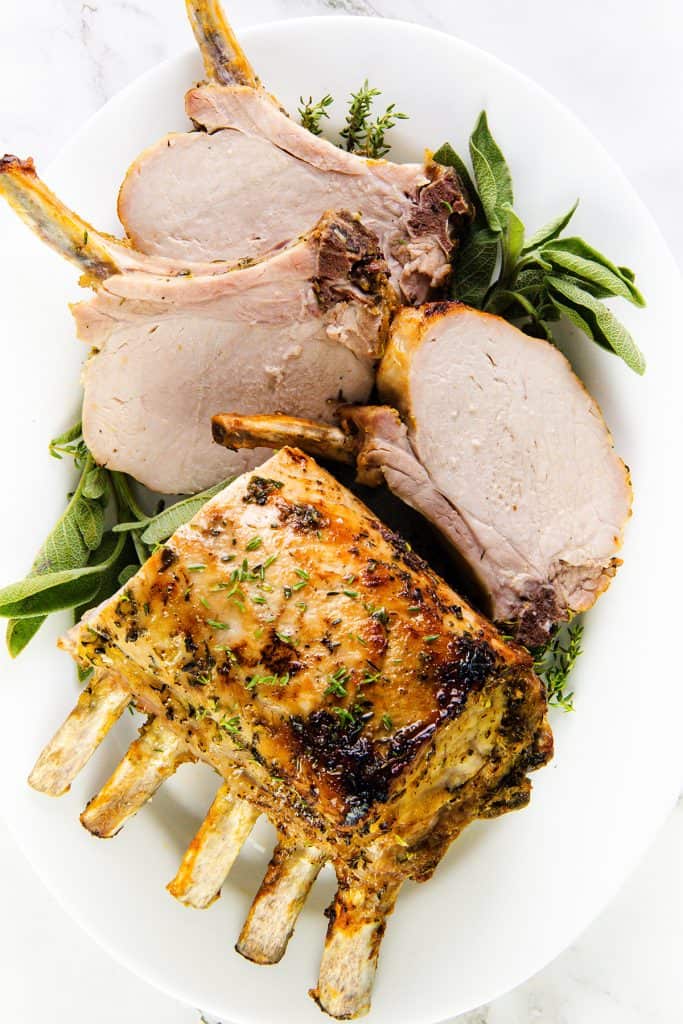
When I first tested this pork rib roast, I realized the secret wasn’t just the herb crust — it was the brine. It kept the meat remarkably juicy all the way to the bone. The baking soda in the brine was the final breakthrough: it slightly raises the pH so the roast stays tender without needing extra time or extra fuss. Once that clicked, everything fell into place — the mustard helps the crust stick, the herbs crisp beautifully, and the whole thing slices into the kind of chops that make you stop talking at the table.
Ingredient Notes
Pork Rib Roast
Best Choice
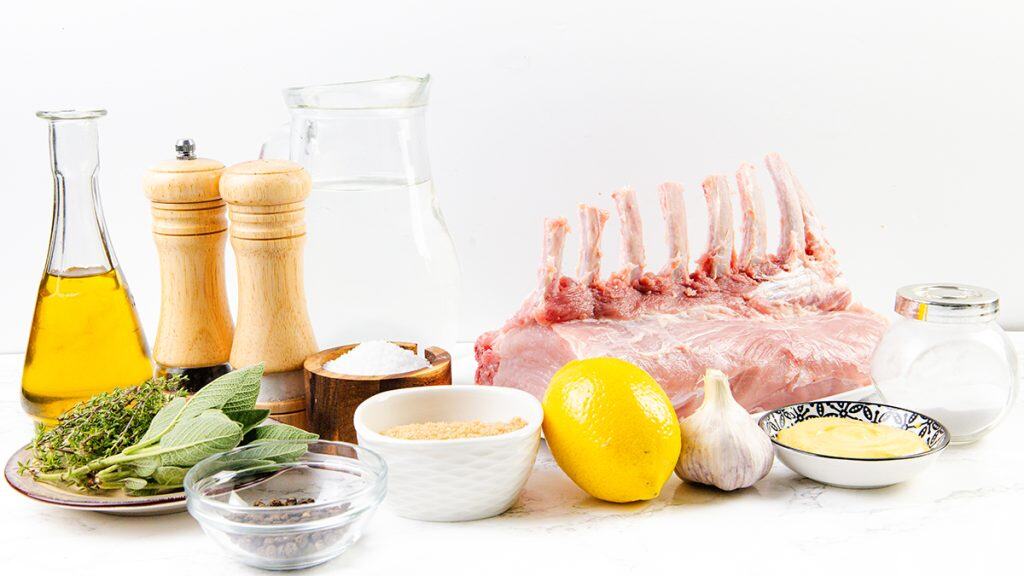
Bone-in, frenched, 5–7 pounds for even cooking and dramatic presentation.
Substitutions
You can use a center-cut pork loin, but it won’t be as juicy.
Where to Find
Ask the butcher to French the bones for you if it’s not available prepped.
Fresh Herbs (Thyme & Sage)
Best Choice
Fresh, not dried — they crisp into the crust beautifully.
Substitutions
Rosemary or marjoram work well if that’s what you have.
Dijon Mustard
Best Choice
Classic Dijon — it acts like glue for the crust.
Substitutions
Whole-grain mustard works but won’t spread as evenly.
Lemon Zest
Best Choice
Adds brightness to balance the rich meat.
Substitutions
Orange zest for a sweeter twist.
You can find the full, printable recipe at the top of this post , but you can read the detailed instructions with photos for each step below.
How To French Cut A Pork Rib Roast
To french-cut a pork rib roast, start by turning the rack so the bones face you. Use the tip of a sharp knife to slice straight down between each bone, cutting through the fat and membrane but not into the meat. Once the bones are exposed, scrape them clean with the back of the knife, working from the meaty end toward the tips until they’re smooth and white. Trim away any loose fat or connective tissue so the rack looks neat and even. If you’d prefer not to do this at home, you can also ask your butcher to French the roast for you—they’ll usually do it quickly at no extra charge.
How to Make Pork Rib Roast
1
Brine the Pork
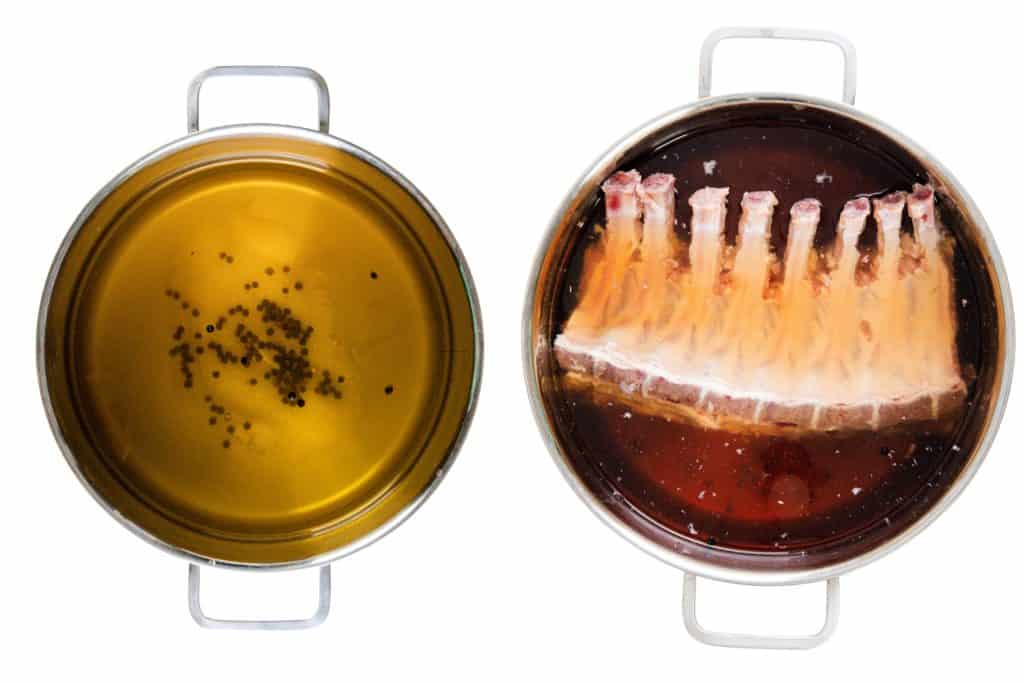
Stir the brine ingredients in a large container until dissolved, then lower the pork into the mixture. Make sure it stays fully submerged, cover, and refrigerate overnight so the meat absorbs moisture and seasoning.
2
Dry and Temper the Roast
Remove the pork from the brine and pat the surface completely dry. Keep going until the exterior looks matte with no shiny spots left. Let it sit at room temperature so it cooks evenly later.
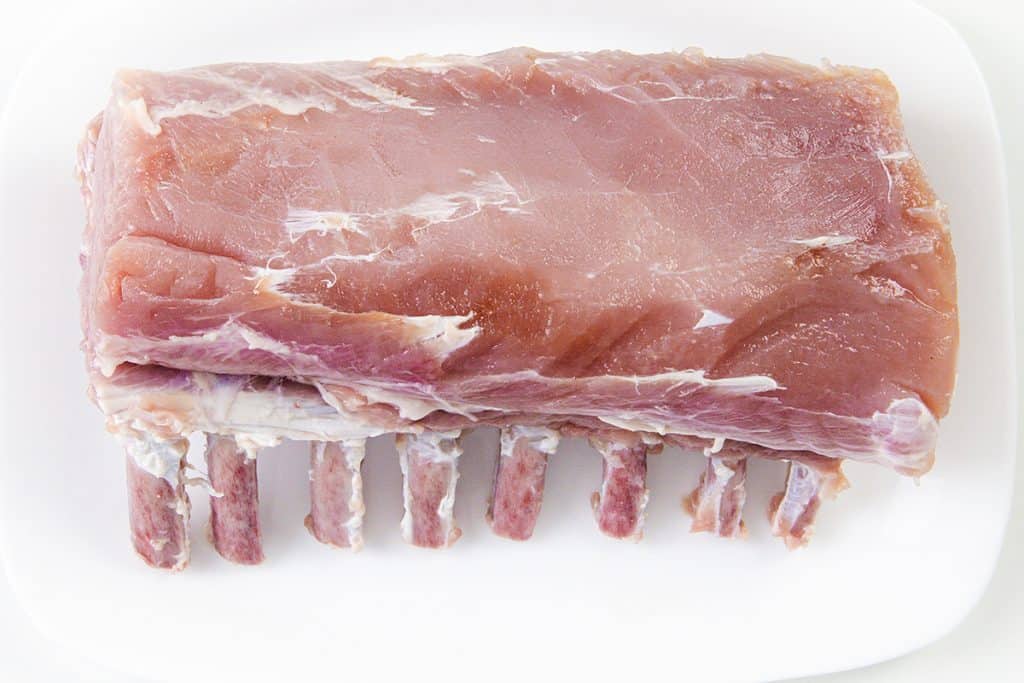
3
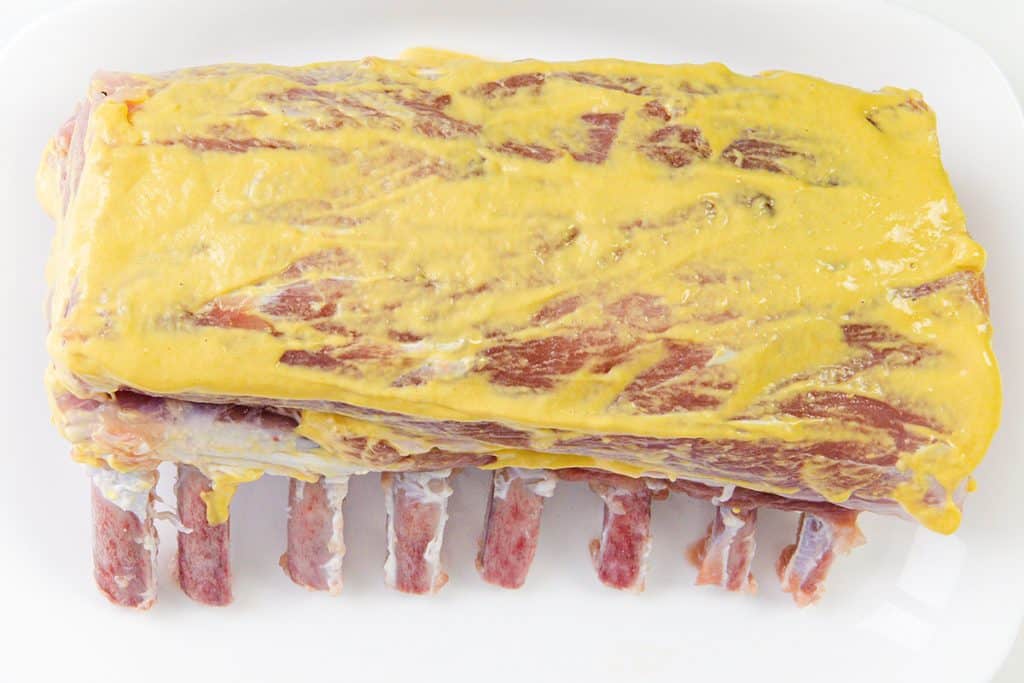
Prep the Pan, Oven, and Mustard Coating
Line a roasting pan with foil and place a rack inside, then heat the oven to a high temperature. Spread Dijon mustard over the entire roast in a thin, tacky layer that helps the crust adhere.
4
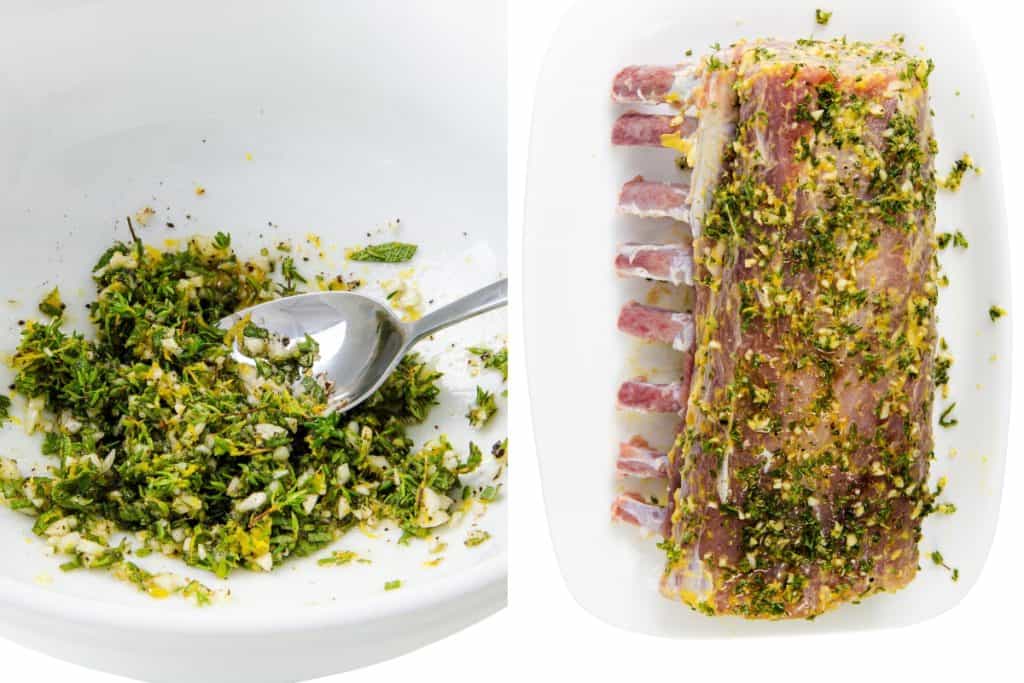
Make and Apply the Garlic Herb Crust
Mix the garlic, herbs, zest, oil, salt, and pepper until combined. Press the mixture onto the top and sides of the pork so it forms a soft, even coating that clings without sliding.
5
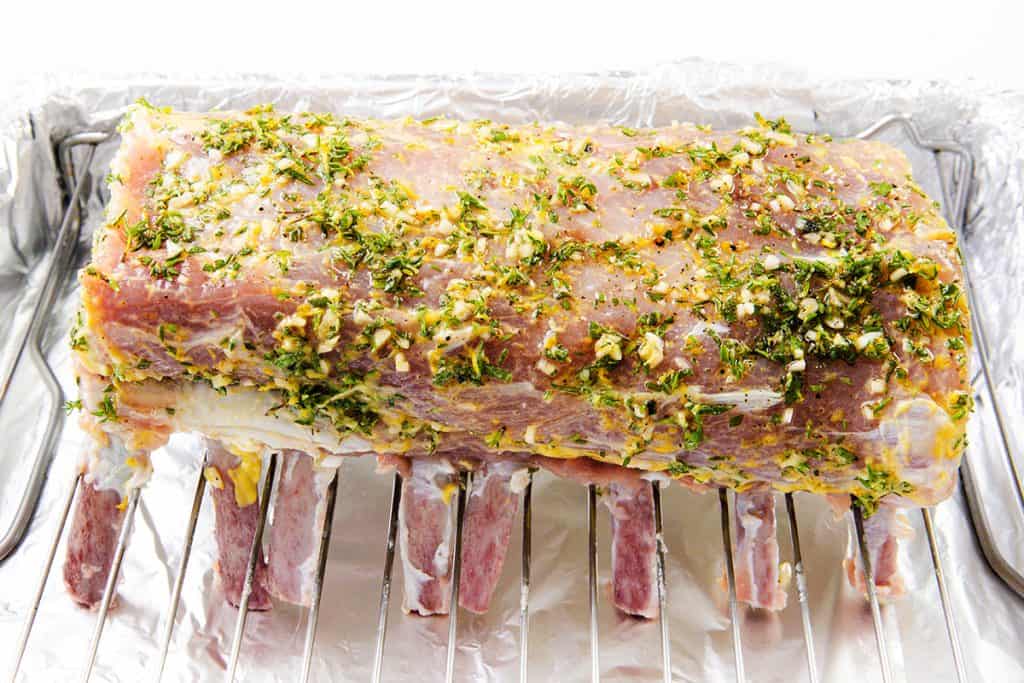
Roast at Two Temperatures
Set the roast bone-side down on the rack. Start at high heat to set the crust, then lower the oven temperature and continue roasting until a thermometer pushed into the center (not touching bone) reaches 140–145°F.
6
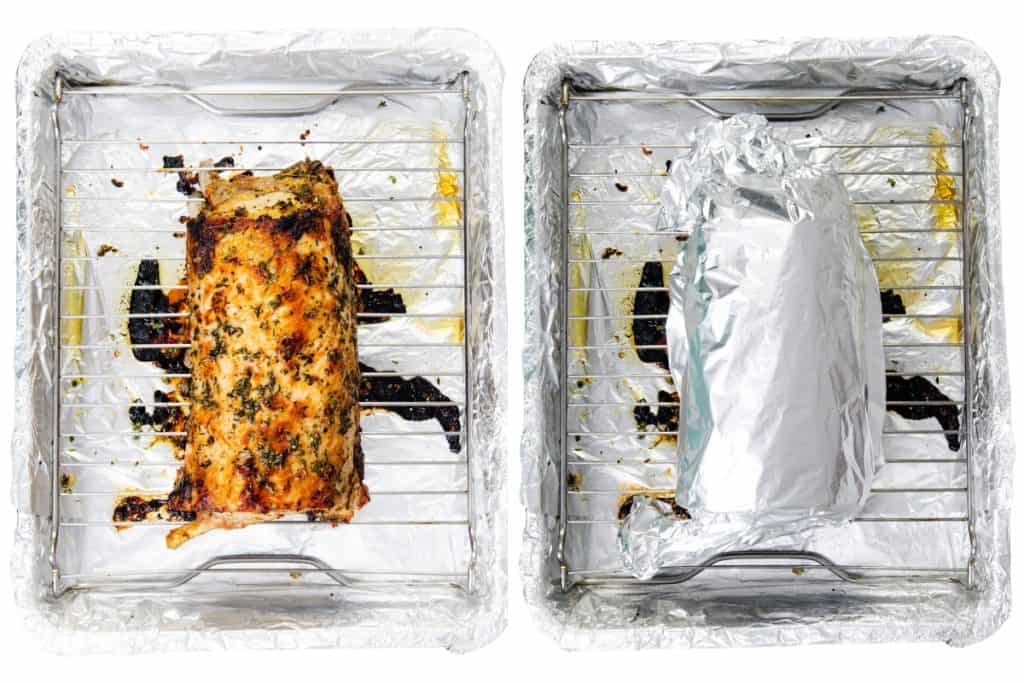
Rest the Rib Roast
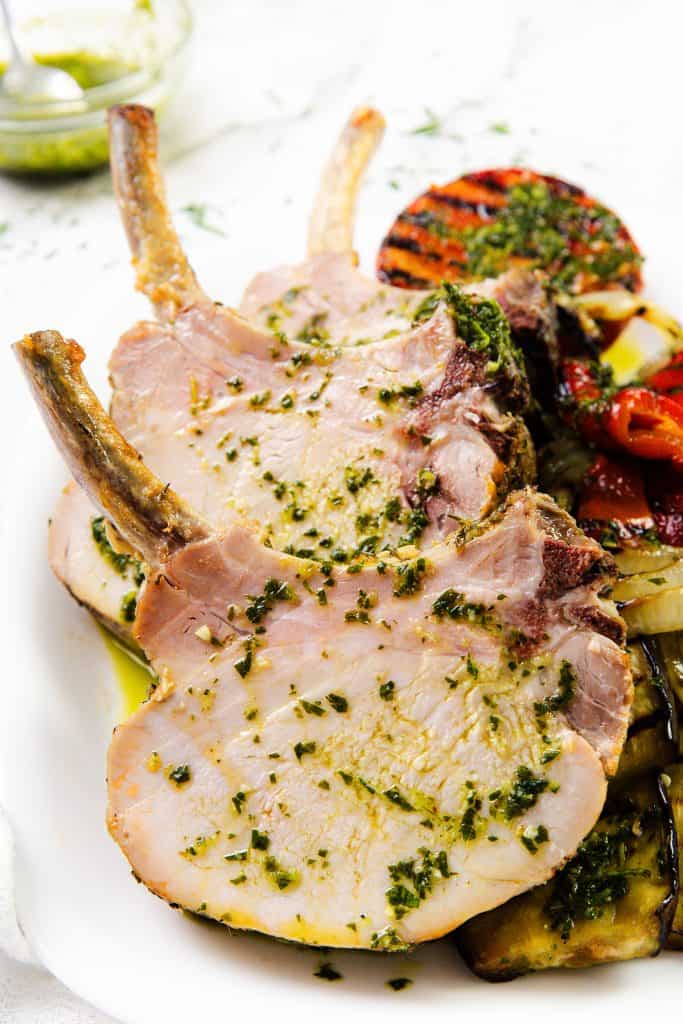
Tent the pork rib roast loosely with foil, and let the juices settle. Slice between the bones into thick chops and season to taste before serving.
7
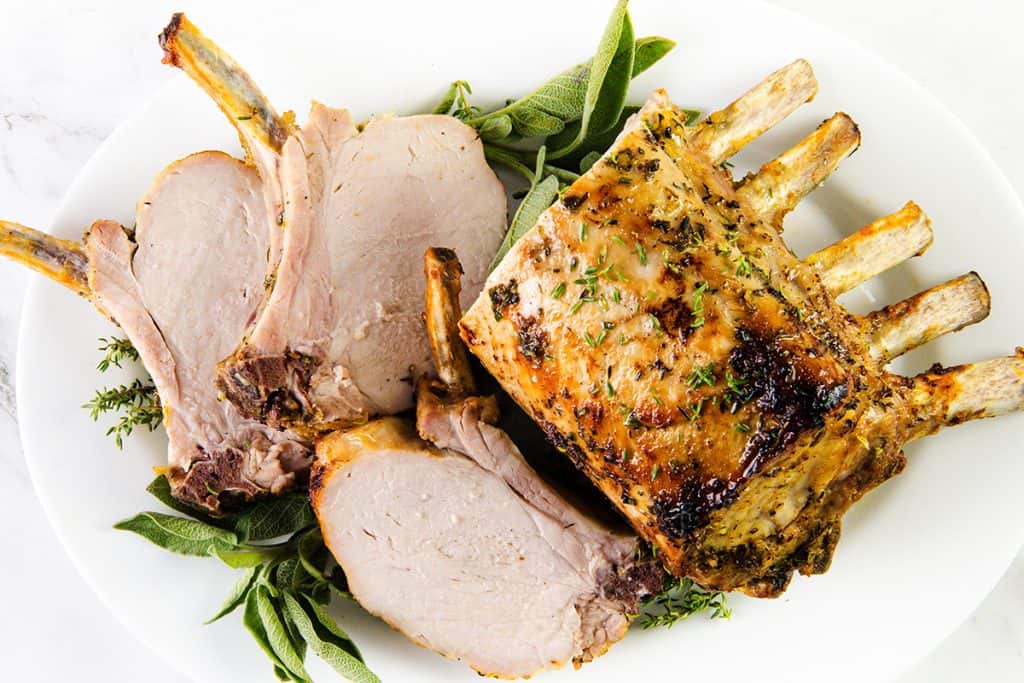
Slice Between Ribs
Slice between the bones into thick chops and season to taste before serving.
7
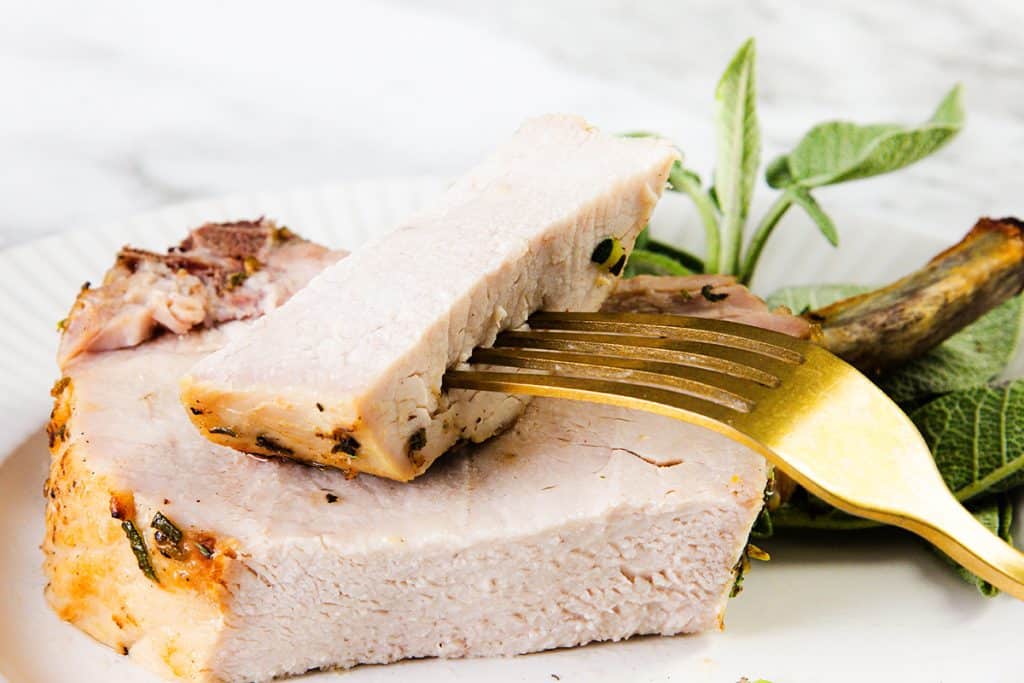
Serve and Enjoy
Arrange the sliced chops on a warm platter, nestling the bones slightly overlapping for a restaurant-style look. Spoon any juices from the board over the top, scatter with a few fresh herb leaves or lemon slices if you like, and bring it straight to the table while it’s still hot and glistening.
Perfect Pairings
- Buttered Frozen Peas with Shallots
- Crispy Garlic Roasted Potatoes
- Make-Ahead Pork Gravy
Ingredients
For the Brine:
- ▢ 8 cups cold water
- ▢ ½ cup kosher salt
- ▢ 4 tablespoons brown sugar
- ▢ 1 tablespoon black peppercorns
- ▢ 1 teaspoon baking soda
For the Roast:
- ▢ 6 lb pork rib roast (bone-in and frenched if possible)
- ▢ 4 tablespoons Dijon mustard
For the Garlic Herb Crust:
- ▢ 6 cloves garlic (minced)
- ▢ 2 tablespoon fresh thyme leaves (chopped)
- ▢ 2 tablespoon fresh sage (chopped)
- ▢ Zest of 1 lemon
- ▢ 1 tablespoon olive oil
- ▢ ¼ teaspoon salt
- ▢ Freshly ground pepper (to taste)
Instructions
- Brine the Roast (Do This the Day Before)
- In a large container or pot, combine the water, salt, brown sugar, and peppercorns. Stir until salt and sugar are dissolved.
- Submerge the pork rib roast in the brine. Cover and refrigerate for 12–24 hours.
- Take the roast out of the brine and pat it completely dry with paper towels. Let it rest at room temp for 30–60 minutes before cooking.
- Preheat oven to 475°F (245°C). Line a roasting pan with foil and place a rack inside if you have one.
- Rub the roast all over with Dijon mustard.
- In a small bowl, mix together the garlic, thyme, sage, lemon zest, olive oil, salt, and black pepper.
- Gently press the mixture over the top and sides of the roast.
- Place roast bone-side down on the rack.
- Roast at 475°F for 15 minutes to brown the crust.
- Lower oven temp to 325°F (165°C) and roast for 1.5 to 2 hours, or until the internal temp reaches 140–145°F.
- Use a meat thermometer in the thickest part of the meat, avoiding bone.
- Let the roast rest 15–20 minutes, tented loosely with foil, to let the juices redistribute.
- Slice between the bones into thick, juicy chops and serve with your favorite cozy sides. 🥰
Tips
Erren’s Top Tips
- Dry the roast thoroughly, moisture is the enemy of browning.
- Press the herb crust on gently; don’t smear or it can slide.
- For extra insurance against overcooking, check the temperature 15 minutes earlier than you expect.
- If the crust browns too quickly, loosely tent with foil to protect it.
- Let it rest, cutting too early makes the juices run everywhere.
Variations & Add-Ins
Storage & Freezing
Nutrition
How long should I brine a pork rib roast?
Twelve to twenty-four hours works best. Any longer and the texture can become too soft.
Can I make this without brining?
You can, but the meat won’t be as juicy or evenly seasoned.
How do I keep the crust from falling off?
Pat the roast fully dry and apply a thin mustard layer, it acts like glue.
What internal temperature is safest for pork?
The USDA recommends 145°F followed by a rest. The roast stays juicy and perfectly cooked.
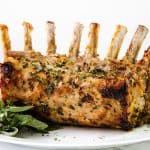
Pork Rib Roast with Garlic Herb Crust
Ingredients
For the Brine:
- 8 cups cold water
- ½ cup kosher salt
- 4 tablespoons brown sugar
- 1 tablespoon black peppercorns
- 1 teaspoon baking soda
For the Roast:
- 6 lb pork rib roast bone-in and frenched if possible
- 4 tablespoons Dijon mustard
For the Garlic Herb Crust:
- 6 cloves garlic minced
- 2 tablespoon fresh thyme leaves chopped
- 2 tablespoon fresh sage chopped
- Zest of 1 lemon
- 1 tablespoon olive oil
- ¼ teaspoon salt
- Freshly ground pepper to taste
Instructions
- Brine the Roast (Do This the Day Before)
- In a large container or pot, combine the water, salt, brown sugar, and peppercorns. Stir until salt and sugar are dissolved.
- Submerge the pork rib roast in the brine. Cover and refrigerate for 12–24 hours.
- Take the roast out of the brine and pat it completely dry with paper towels. Let it rest at room temp for 30–60 minutes before cooking.
- Preheat oven to 475°F (245°C). Line a roasting pan with foil and place a rack inside if you have one.
- Rub the roast all over with Dijon mustard.
- In a small bowl, mix together the garlic, thyme, sage, lemon zest, olive oil, salt, and black pepper.
- Gently press the mixture over the top and sides of the roast.
- Place roast bone-side down on the rack.
- Roast at 475°F for 15 minutes to brown the crust.
- Lower oven temp to 325°F (165°C) and roast for 1.5 to 2 hours, or until the internal temp reaches 140–145°F.
- Use a meat thermometer in the thickest part of the meat, avoiding bone.
- Let the roast rest 15–20 minutes, tented loosely with foil, to let the juices redistribute.
- Slice between the bones into thick, juicy chops and serve with your favorite cozy sides. 🥰
Video
Notes
Erren’s Top Tips
- Dry the roast thoroughly, moisture is the enemy of browning.
- Press the herb crust on gently; don’t smear or it can slide.
- For extra insurance against overcooking, check the temperature 15 minutes earlier than you expect.
- If the crust browns too quickly, loosely tent with foil to protect it.
- Let it rest, cutting too early makes the juices run everywhere.
Variations & Add-Ins
Storage & Freezing
Nutrition
Thank you for visiting Erren’s Kitchen!
